Warehouse Automation: The Next Frontier
Global Market: The Rapid Rise of Warehouse Automation
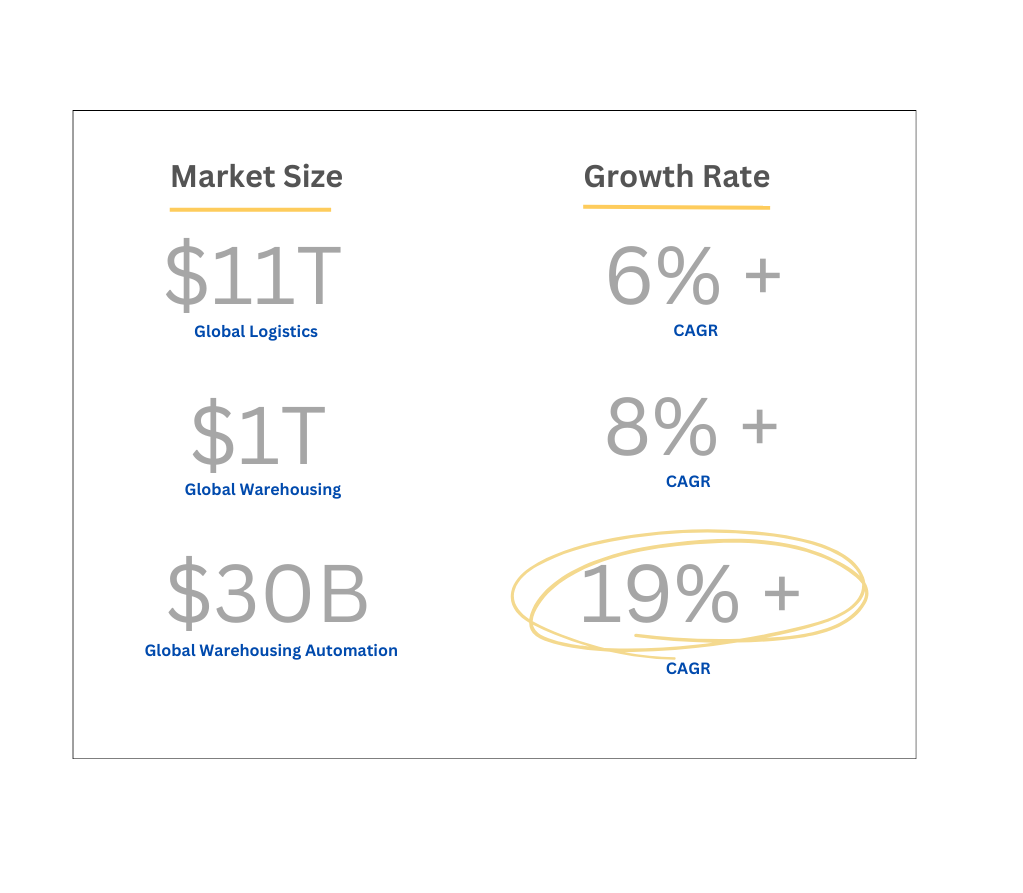
Warehouse automation is rapidly reshaping global logistics. Currently valued at approximately $30 billion, the global warehouse automation market is projected to grow at a compelling compound annual growth rate (CAGR) of 19%. This growth significantly outpaces the broader logistics and warehousing sectors, which are expanding at rates of around 6-8% annually.
Challenges India Faced in the Past & Why This is India’s Moment to Shine
While warehouse automation looks fascinating from the outside, real hurdles have historically slowed its adoption in India. There were some common concerns :
- Does the high upfront CAPEX justify the ROI?
- Can the existing workforce adapt to working with automated systems?
- Why invest in automation when labor is still relatively cheap?
However, the landscape is rapidly shifting. After speaking to grade A warehouse owners, the insight was clear : Automation is no longer a luxury—it’s becoming a necessity.

- Hardware costs have dropped significantly, making automation more accessible.
- India now boasts world-class engineering and robotics talent, fueling innovation.
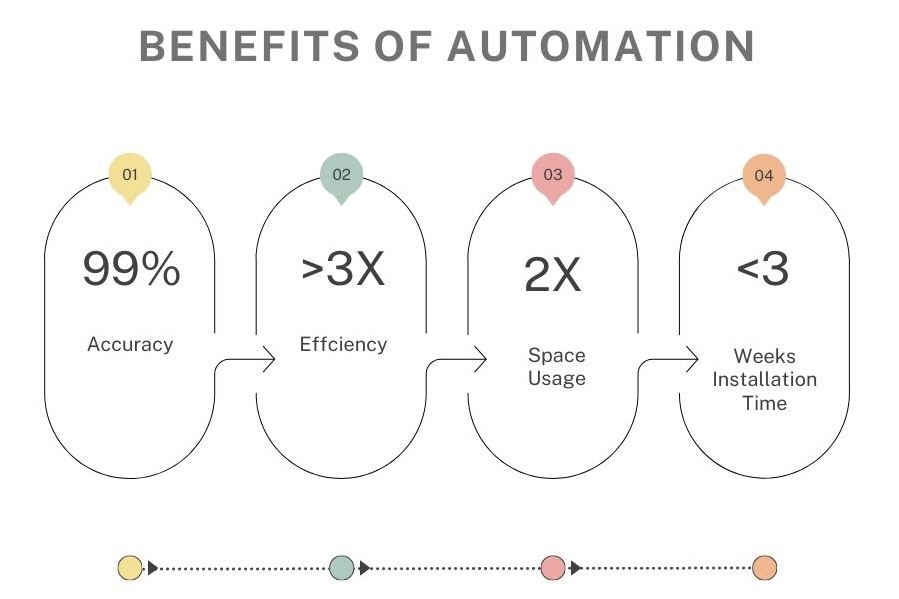
- Proven case studies demonstrate higher throughput, efficiency, and accuracy, removing doubts around ROI.
- Labor costs are rising, making automation a cost-effective, long-term strategy.
The benefits are becoming too big to ignore—and India is ready to lead the next wave of warehouse automation.
The Automation Stack: Robotics, Software, and AI
The warehouse automation ecosystem integrates multiple layers, broadly categorized into robotics hardware and intelligent software solutions:
1. Robotics Hardware Stack
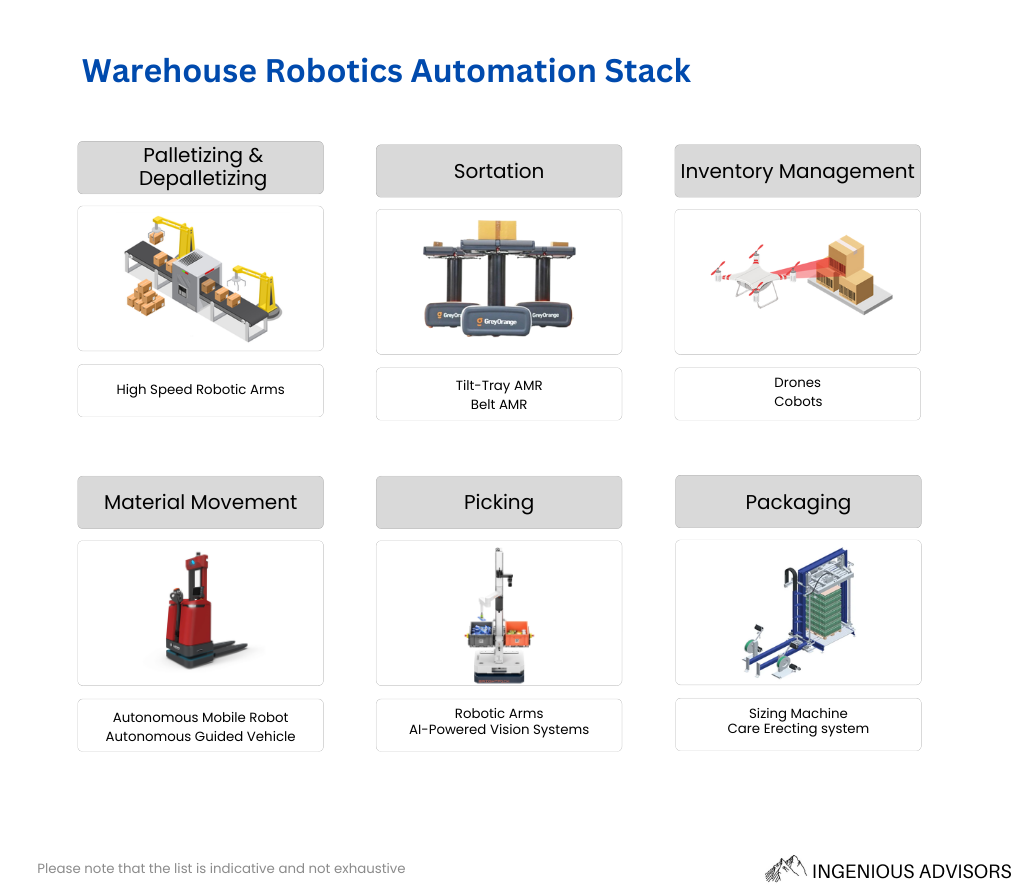
- Material Movement: Autonomous Mobile Robots (AMRs), Automated Guided Vehicles (AGVs) for internal logistics.
- Sortation and Picking: Tilt-Tray AMRs, Belt-driven AMRs, high-speed robotic arms, and drones for rapid item picking, sorting, palletizing, and depalletizing tasks.
- Inventory Management and Packaging: Collaborative robots (cobots), sizing machines, automated packaging, and case erecting systems streamline inventory accuracy and efficiency.
2. Software and AI Stack
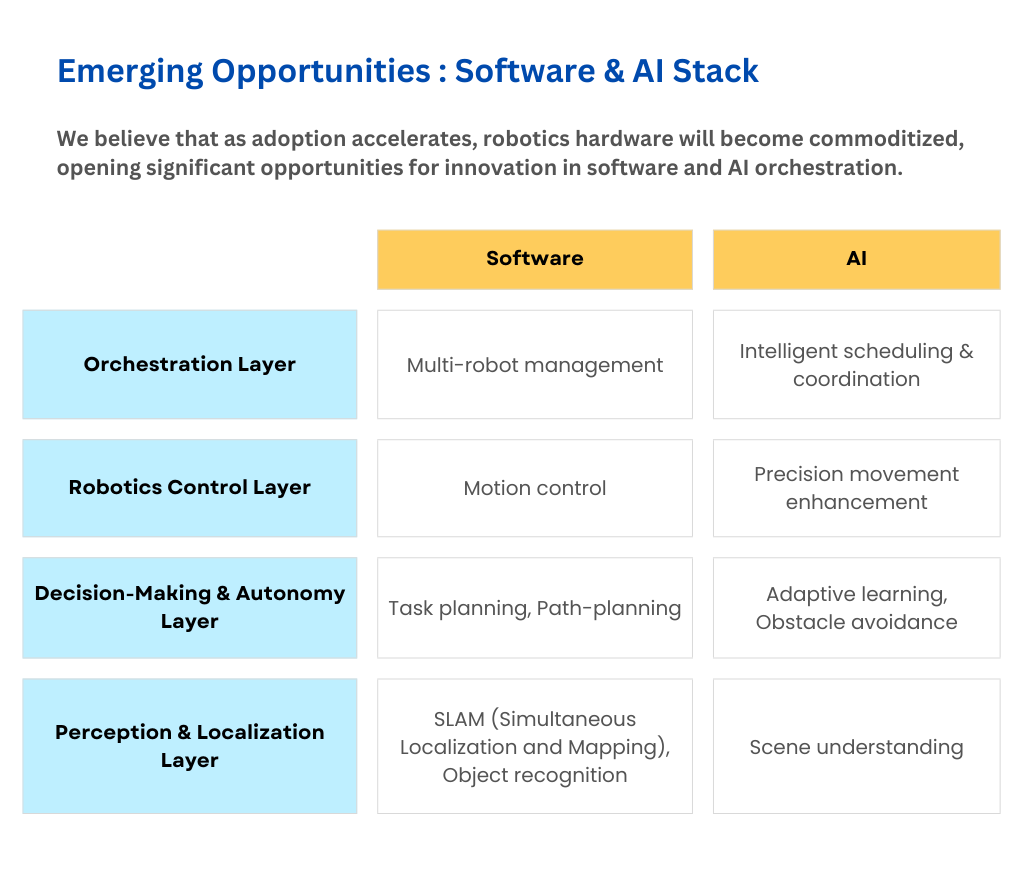
Advanced AI-driven software is rapidly becoming the core differentiator, significantly enhancing operational intelligence and scalability:
- Orchestration Layer: Enables efficient multi-robot management, intelligent task scheduling, and optimized resource coordination.
- Robotics Control Layer: Precision motion control software improves accuracy, speed, and safety of robotic movements.
- Decision-Making & Autonomy Layer: AI-powered decision-making supports task planning, path optimization, adaptive learning, and obstacle avoidance, enabling greater autonomy.
- Perception & Localization Layer: Leveraging technologies such as SLAM (Simultaneous Localization and Mapping), vision-based object recognition, and sophisticated sensor systems enhances robot navigation, accuracy, and situational awareness.
Market Map: Leading Players in India’s Warehouse Automation Landscape
India’s warehouse automation sector is vibrant, with key players making significant impacts:
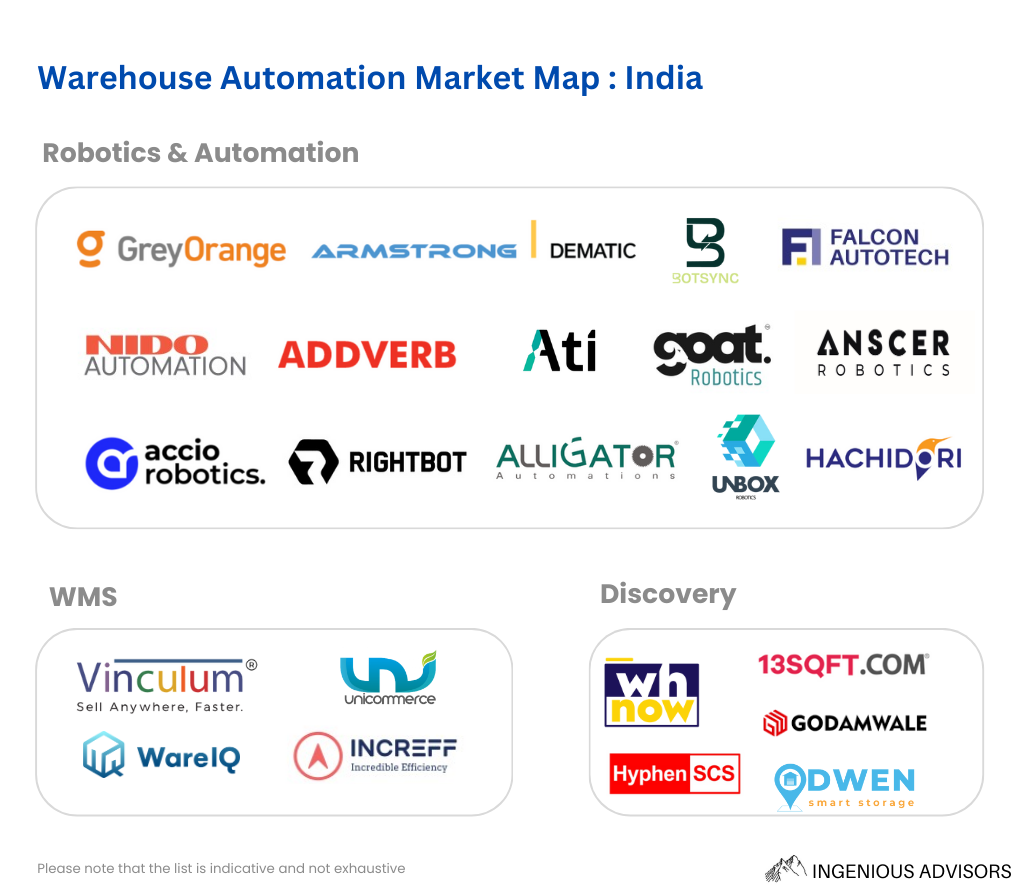
These companies, among others, are rapidly innovating and expanding the scope of warehouse automation, establishing India as a key hub for automation innovation.
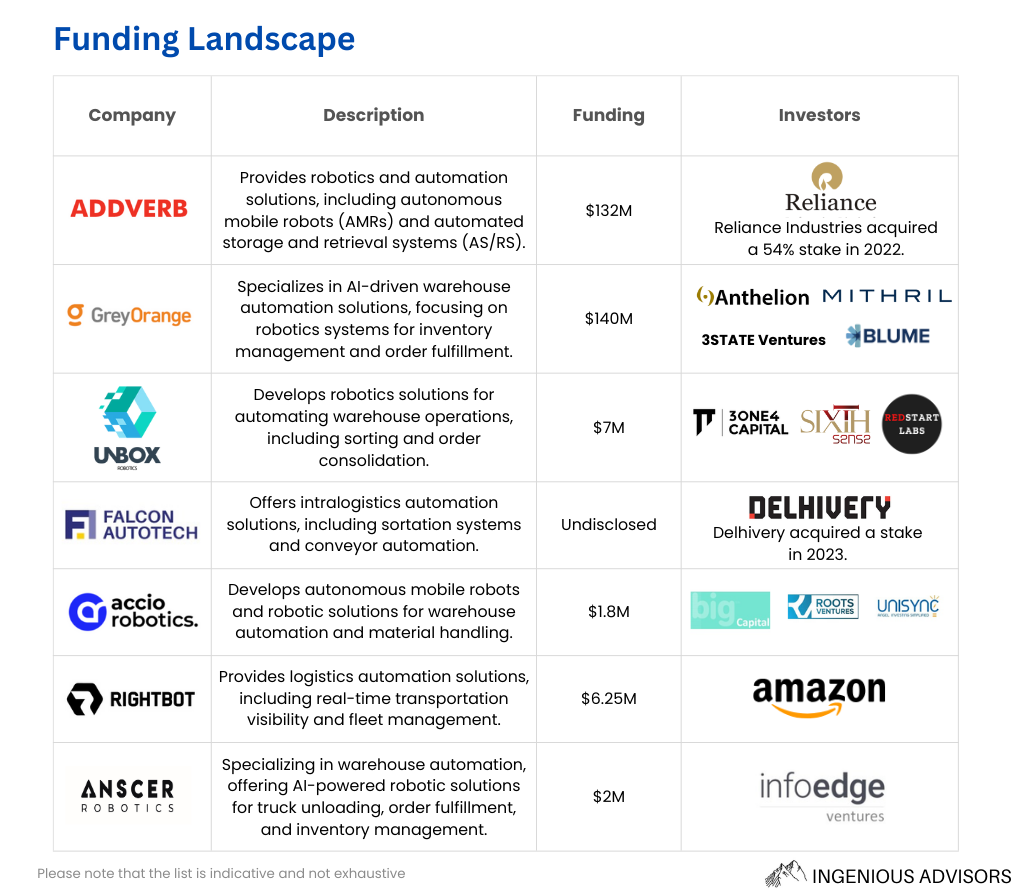
Investments & Acquisitions
The funding landscape for warehouse automation in India is heating up, marked by significant venture investments and strategic acquisitions.
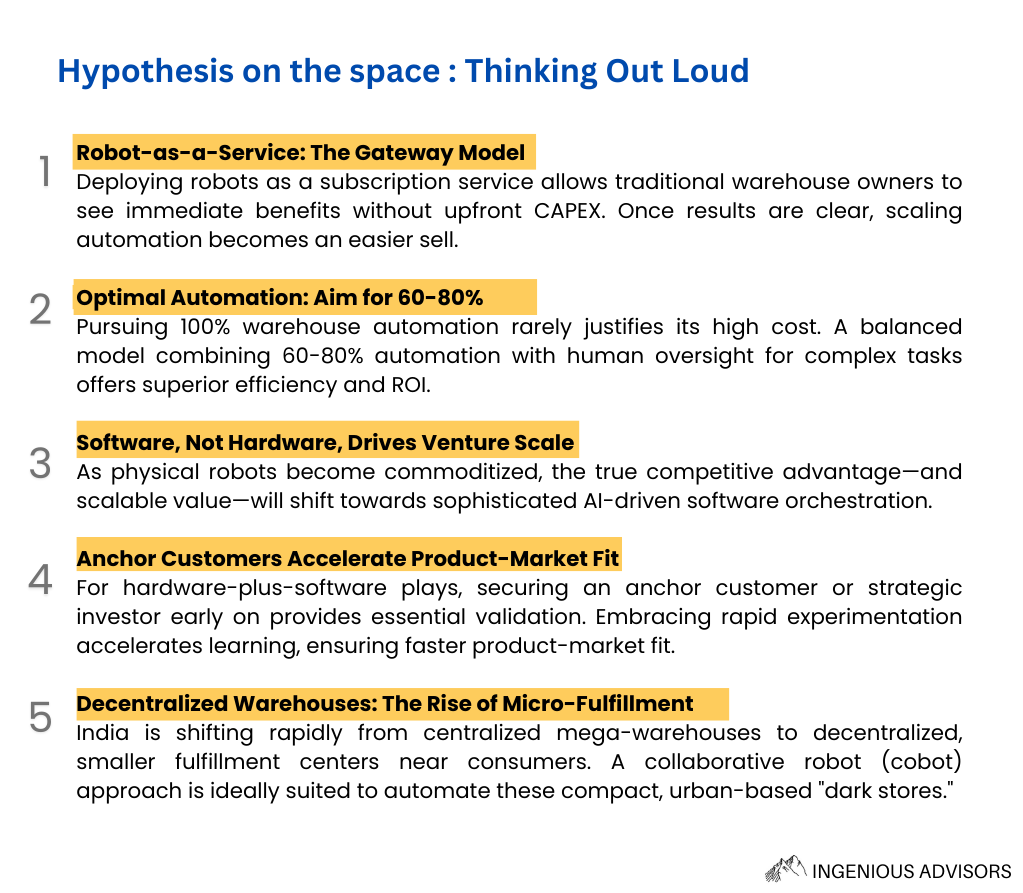
Ingenious Insights on the space:
Conclusion: India’s Moment to Lead
As global logistics increasingly embrace automation, India has a timely and strategic opportunity. By capitalizing on its booming e-commerce sector, decentralized warehouse models, and robust technology ecosystem, India stands poised to lead in warehouse automation innovation—not just domestically, but globally.
The era of intelligent warehouse automation has arrived, and India’s role in shaping its future could be pivotal.